
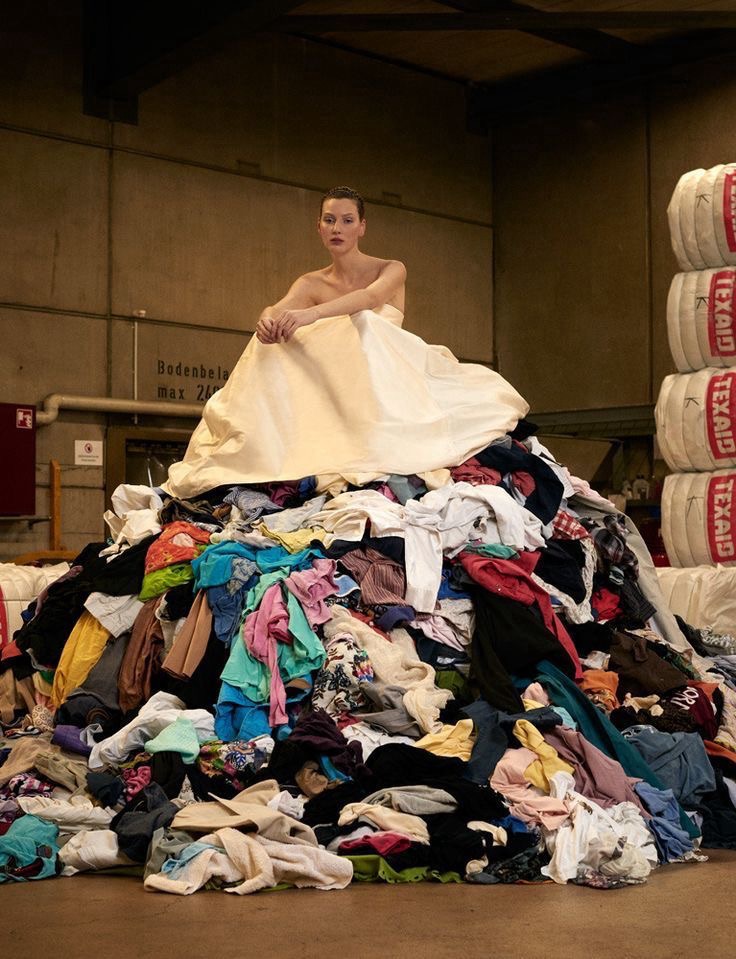
I don’t buy new clothes anymore (for the most part). It’s not that I don’t shop, quite the opposite in fact. I’ve always been an avid Vinted and Depop user, but I was a sucker for the ease of ASOS and the trendiness of Urban Outfitters (the Iets Frans Harri joggers do still have me in a chokehold, I will not lie). Then I moved to China, and Vinted was no longer an option. I became addicted to Taobao, and while I did find some gems there, I also found a lot of duds.
I had thrift shopped in person many a time before, but I just wasn’t fully committing. If I didn’t find the perfect item within 5 minutes I would give up. I mean, why would I bother when I could walk into Zara and see the perfect Friday night drinks with the girls outfit on the mannequin, that I probably will only wear that one time and then never again? Then I went to Tokyo. I knew this would be the holy grail of thrift shopping, and I was ready to take full advantage. I took an entire day out of my trip devoted to only thrifting. Not one single item was left unchecked, and this is when I really realised that thrifting was FUN. I mean, I always found it fun, but so was shopping in every other form. Thrifting feels different, because when you find a great piece, it feels like you’ve really earned it. I ended up finding so many gems hidden away that I normally would have missed, and I realised what I had been missing out on.
I will be honest. I was never the biggest consumer of fast fashion and microtrends. I have been a long time Shein hater (I will admit though, I caved and bought three tops one time in 2020 and they were the worst things I’ve ever received), I try my best not to follow trends, although I don’t think anyone is truly immune, and I have clothes that I still wear from five years ago. However, I didn’t really understand, fully, what fast fashion actually was until recently. I knew Zara was like, kinda fast fashion, but their clothes aren’t cheap so surely it’s not that bad? Like at least it’s good quality, right?
Well anyways, back to Taobao. After spending A LOT of money on a top that was just ok when it arrived, I complained to my friend. She told me she would never spend a lot of money on an item without checking what materials it was made from first. This was like an epiphany to me. Why had I never thought of this before? It almost felt like a cheat code. Before I would do an ASOS shop just in time for the weekend, only for the dress I was coveting all month to come and look like it was made from tissue paper and a dream. I would try to convince myself it was fine and wear it anyway, only to feel self conscious the whole time. Now someone’s telling me I could have just read the label and found out it was 100% polyester?
Of course this idea had crossed my mind before, but I had just never thought about it, not until I realised that it was an actual solution to a very real problem.
From this point onwards I read every label. I found “wool” jumpers that were actually only 15% wool and 85% plastic, for the low, low price of one of your kidneys, “silk” dresses that actually only contained enough silk to cover your big toe, and winter coats with a fabric content that promises you warmth and comfort — in July.
Which? Conducted a study in which they found over half of 574 people surveyed believe the quality of high street clothes has become worse in recent years. Polyester is the most widely used fibre globally, overtaking cotton in 2002. Charlene Gallery, Reader in Digital Fashion Innovation at The University of Manchester told Which?, ‘The widespread downgrading of materials – including reduced fabric density and substitution with cheaper fibres – has led to garments that deteriorate far faster than in previous decades’. Our clothes may only last a few washes, but who cares when the trend cycle moves on every few weeks?
And this issue isn’t just prevalent amongst ultra-fast fashion retailers like Shein, but also high street stores, such as Zara and H&M.
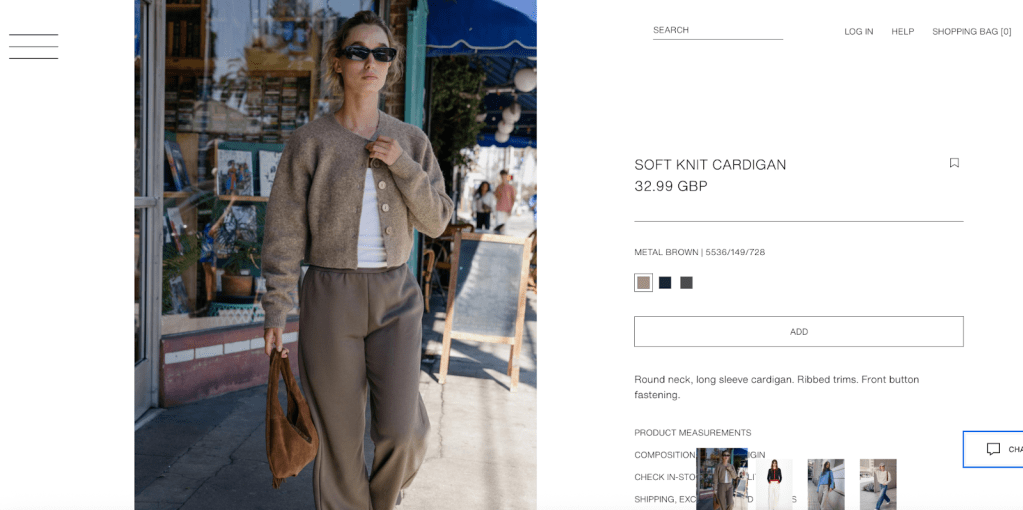
Zara are currently selling this cardigan for £32.99.
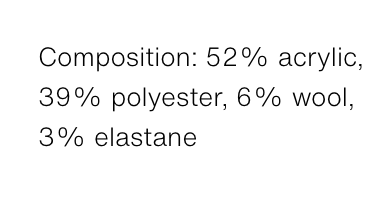
But when you look at the composition, only 6% is made of wool, and the rest of the cardigan is plastic. You could buy three pure wool cardigans on Vinted for the same price.
According to the World Wildlife Fund, it takes 2,700 litres of water to produce just one cotton T-shirt. If we look at polyester, it is derived from petroleum, leading to fossil fuel reliance. Its production process creates pollution and carbon emissions, and it releases microplastics during use and after disposal, so imagine what that is doing to our bodies, let alone the environment. These microplastics and the dyes used in the fabrics also contaminate water sources, destroying ecosystems in the process.
The environmental impact of fast fashion isn’t the only concern. These brands perpetuate a cycle of exploitation . Workers endure long hours, exploitation, earn extremely low wages — sometimes even being forced to work for free, all without job security. Research from the Clean Clothes Campaign showed that in 2014, 85% of the top 20 clothing brands said wages should meet workers’ basic needs, but in 2019 the same brands could not prove any garment workers were being paid a living wage. In 2013, the Rana Plaza in Bangladesh collapsed, claiming the lives of 1,138 garment workers, with Amnesty International calling it ‘the most shocking recent example of business-related human rights abuse’. And it doesn’t end there. It has been shown that the majority of workers in the fast fashion industry are women, who often face gender-based discrimination.
Recently, I found the most stunning jacket on Vinted. It was a brown (real) suede Afghan style coat with brown (REAL) rabbit fur along the lining. I was hesitant to buy it because it was on the pricier side and I was supposed to be going to New York, so naturally I needed to save money. However, I just couldn’t get this coat out of my mind and I showed it to my friends, hoping someone would tell me it wasn’t worth it and thus I could finally get over it. Instead, a friend told me it was an investment piece and that I could pass it down to my children, and honestly she was right, and so I bought it, and it’s one of my most prized possessions. Can you say the same about your Molly Mae leather jacket, or is it already in a landfill somewhere?
Buying second hand isn’t a punishment. It’s fun. You can haggle. You can spend hours trying to find someone else selling the same top you’ve had in your likes for a fraction of the price. You can find items that no one else will ever have. It also forces you to become more creative and figure out your personal style. It’s easy to go into a store where everything is stylish and perfectly curated. That’s like, the whole point of fast fashion — of course it looks good, or no one would care. When you thrift, you have to do all the heavy work, but it’s so much more gratifying.
This doesn’t mean you should just throw out all your fast fashion pieces and only wear second hand clothes — quite the opposite actually. Keep your clothes, don’t be afraid to wear them for as long as you can, and learn how to style them in different ways. When buying things in the future, think, do I really need this, or do I just want it because I saw my favourite influencer wearing it? Look for fashion inspiration in different forms; real life, movies, magazines — not just that girl on Instagram who will wear that top once for a post and never again.
I’m not here to lecture you, you can buy all the fast fashion you want, you just will never be the cool girl you so badly want to be.
 The 20 Something Chronicles
Leave a comment